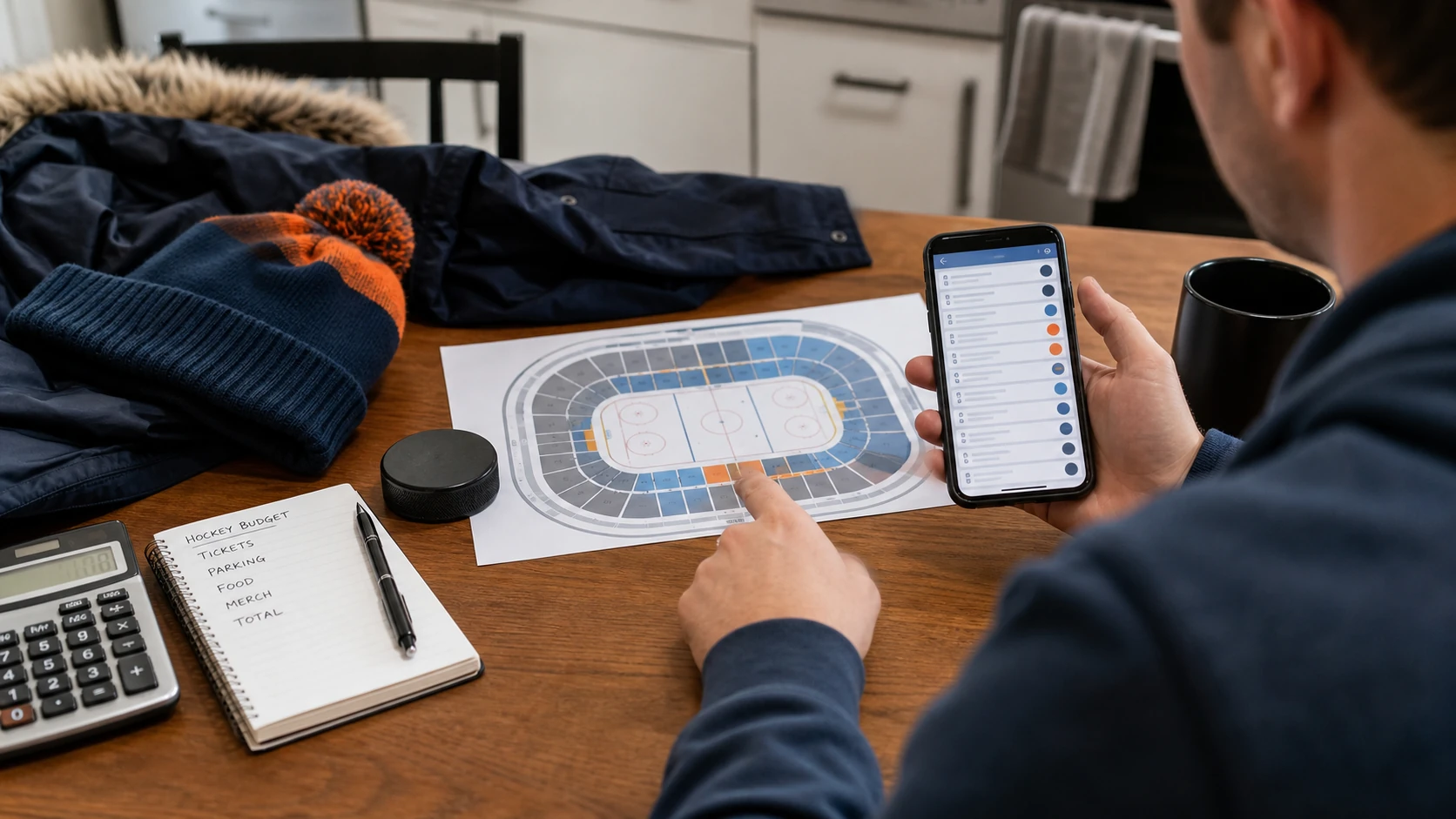
Checked August 27, 2026: There is no dependable single price for an NHL ticket. Ticketmaster currently describes a broad $100-$150 average, but an actual 2026-27 seat can fall below or far above that range depending on the team, opponent, date, section, inventory type, purchase time and mandatory fees.
Use the final cost for one seat at one game as your comparison unit. A low advertised starting price, a season-member per-game average and a resale asking price measure different products. This guide explains those differences and shows how to build a realistic game-night budget without treating a promotional number as a guaranteed quote.
Why there is no single NHL ticket price
The NHL supplies the competition, but each home market has its own arena, seating inventory, demand and ticket products. Even inside one building, the price can change dramatically between an upper corner, center ice, a club area and an all-inclusive seat. Moving the same seat from a weekday game to a home opener or rivalry night can change the comparison again.
The product label matters just as much. A “starting at” advertisement usually identifies limited entry-level inventory for selected games. A season-ticket chart may divide a package total by many home dates and attach member benefits. A public single-game listing prices one event. A resale listing is an asking price chosen by an existing holder and can move as supply and demand change.
Use six checks before comparing any two numbers:
- Are they for the same matchup and date?
- Are both standard tickets, both resale tickets or different inventory types?
- Are the sections, rows and included amenities comparable?
- Does each number cover one seat or several seats?
- Are both totals shown in the same currency?
- Do both include the same mandatory fees and applicable taxes?
If any answer is no, you are not measuring like for like. Boston's official 2026-27 announcement, for example, advertised a $50 starting point for select games while also saying price varies by opponent and date and may change. That statement supports a real entry point; it does not establish $50 as the Boston average or the price of your preferred matchup.
First choose the game on the complete 2026-27 NHL schedule. Then compare a few seats for that exact event using the same quantity and checkout stage. That narrower method produces a useful budget; a leaguewide headline number produces only orientation.
What the $100-$150 NHL ticket average does—and does not—tell you
Ticketmaster's current 2026-27 NHL FAQ says an average ticket can cost between $100 and $150. It is reasonable to use that range as a first line in a rough budget. It is not a promise that you will find your preferred seat in that band, and it is not enough evidence to rank teams or declare a game expensive.
The published FAQ does not show the underlying sample, how standard and resale listings are weighted, whether premium inventory is included, which purchase dates are measured or whether mandatory fees are part of the range. It also does not present a median. Without that methodology, readers should not assume that half of available seats cost less than $100-$150 or that the range equals face value.
An average can also hide a wide distribution. A small group of premium seats may be much more expensive than upper-level inventory. A highly demanded Saturday rivalry can sit far above a quieter weekday matchup in the same arena. Conversely, a preseason promotion or limited standard seat can appear far below the broad range without disproving it.
Use the figure in two steps. First, multiply it by the number of people in your party to create a provisional ticket-only allowance. Second, replace that placeholder with the complete checkout totals for two or three comparable seats at your actual game. Keep transportation, food and lodging separate until the final budget section.
The most honest answer to “What is the average NHL ticket price?” is therefore conditional: one current marketplace cites $100-$150, but your useful price is the all-in total for the exact inventory you can buy. Record the date of the check because both standard and resale availability can change.
What goes into the final checkout total
For tickets sold to U.S. consumers, the FTC's Rule on Unfair or Deceptive Fees has applied to live-event ticket offers since May 12, 2025. When a seller displays a price, mandatory fees it knows and can calculate upfront generally must be included in the displayed total. The rule covers primary sellers, marketplaces and resellers. It improves comparison, but it does not ban every fee or require ticket prices to remain static.
The FTC guidance allows certain items—such as government charges, shipping and genuinely optional products—to be disclosed later, provided the final amount is shown before payment. Buyers outside the United States should check the rules and disclosures that apply in the event's market.
Build the ticket subtotal in this order:
- Set the correct number of seats and choose the exact section and listing type.
- Record the prominently displayed total for each selected seat.
- Add any tax or government charge shown later in the flow.
- Decline or consciously include optional insurance, parking, hospitality or other add-ons.
- For an international purchase, account for currency conversion and any card-issuer charge outside the ticket seller's control.
- Confirm the final amount before authorizing payment and save the receipt.
A fee breakdown can still appear, but the itemization should not distract from the total you must pay. Also check whether the page shows a per-ticket number or the total for your party. Four seats displayed at one amount each can become a much larger order even when the interface complies with upfront pricing rules.
Keep the ticket total separate from the complete game-night cost. Parking bought during checkout may be optional; transportation, food and lodging may be purchased elsewhere. Those expenses matter to your budget even though they are not part of the live-event ticket price.
The biggest factors that move NHL ticket prices
No factor works in isolation, and none guarantees a bargain or premium. Think of each listing as the result of several conditions meeting at one moment:
- Seat and amenities: center-ice sightlines, lower rows, clubs, lounges, food or parking inclusions can increase cost. An unobstructed upper-level seat may offer better value than a poorly located lower seat.
- Opponent and story: rivalries, a Stanley Cup rematch, a star's visit or a retirement ceremony can concentrate demand. A famous opponent does not affect every section equally.
- Day and start time: weekends and convenient evening starts may attract more buyers, while some weekday games offer more choice. A special opponent or promotion can override that pattern.
- Season stage: home openers, holiday dates, late-season playoff races and postseason games carry different uncertainty and demand from an ordinary early-season matchup.
- Team performance and availability: winning, injuries, milestones and standings can change interest after the original sale. The remaining number of seats and the size of your party also matter.
- Seller and timing: standard inventory and resale asking prices respond differently. The FTC permits dynamic pricing when it is not misleading, so even primary totals can change as demand and inventory change.
Schedule flexibility gives you leverage over several factors at once. Use the NHL schedule for this week to compare nearby dates, or scan farther ahead before travel becomes fixed. If a Saturday rivalry is outside your budget, a midweek opponent in the same seating level may produce a more useful comparison than moving to a poor seat at the premium game.
Home openers deserve separate treatment because opening-night ceremonies and pent-up demand can make them unlike a typical game. Check the 2026-27 NHL home opener list, then compare that event with the club's next two home dates. The exercise reveals how much of the price is tied to the occasion rather than the arena or team alone.
Official 2026-27 price examples without false comparisons
Official numbers are useful only when their product labels remain attached. These examples were checked August 27, 2026 and intentionally combine different products to show why a “cheapest NHL team” conclusion would be invalid.
| Official example | Published number | What it measures | Why it is not a league average |
|---|---|---|---|
| Chicago Blackhawks | From $20 | Advertised entry point for preseason tickets | Preseason demand and limited floor inventory differ from regular-season seats |
| Boston Bruins | From $50 | Select regular-season games at TD Garden | The club says opponent/date matter and prices can change |
| Philadelphia Flyers | Listed membership averages span at least $94-$457 | Average ticket cost for different full-season seating categories | Package commitment and premium inclusions differ by location |
| Edmonton Oilers | $1,138.55-$2,430.01 in listed 11-game sections | Quarter-season package total per seat | It covers 11 games, multiple sections and a Canadian-market product |
Do not place the four numbers in one ranking. Chicago's figure is a promotional preseason floor. Boston's is a select-game regular-season floor. Philadelphia publishes per-ticket membership averages by location. Edmonton publishes package totals that must first be divided by the included number of games, while currency and product terms also need to match.
The table does provide two strong lessons. First, sub-$100 NHL inventory can exist without making $100 a dependable all-team ceiling. Second, several-hundred-dollar premium or package averages can exist without making that figure the minimum price to enter the arena. The specific event and seat remain decisive.
When a club publishes a price map, save the season label and terms with the number. Confirm whether preseason dates are mandatory in a membership, whether food or club access is included, how many games the total covers and whether prices may change. Those details are the difference between usable evidence and a misleading screenshot.
Standard tickets versus resale prices
A standard ticket is inventory released by the team, venue or initial seller. A resale ticket is listed by someone who already acquired the seat. They can appear together on one event map, but the number attached to each seat is formed differently.
Standard does not always mean fixed. Sellers can adjust available prices as demand or inventory changes, and the FTC's total-price rule does not prohibit dynamic pricing. Resale asks can also move whenever the holder changes the listing or comparable seats sell. The word “resale” therefore does not mean automatically cheaper or automatically more expensive.
Compare the same product at the same time:
- Choose one section or a narrow group of comparable sections.
- Keep row quality, seat quantity and any view restriction consistent.
- Separate standard and resale labels.
- Compare prominently displayed totals rather than an old screenshot or a search result.
- Check delivery timing, transfer method and the marketplace guarantee before using price as the tiebreaker.
A resale seat may offer value after standard inventory in that section disappears. It may also carry an ambitious asking price while similar standard seats remain. Close to the game, a seller might reduce a price to avoid an unused ticket—or demand might increase and remove the cheaper options first. Neither outcome is promised.
Price is only one part of the comparison. A lower informal offer with no verified transfer or buyer protection can have worse expected value than a higher authorized listing. Reach the marketplace from the home club or NHL event page, confirm what happens if delivery fails, and make sure the ticket will arrive in the account or app required for entry.
Ways to find cheaper NHL tickets
The most reliable saving tool is flexibility, not a secret seller. Every team has 42 regular-season home games in 2026-27, so changing the game, seat band or party plan can create more options without sacrificing an authorized purchase route.
- Compare multiple dates. Check a weekday and weekend, then compare different opponents in the same seat band. Avoid assuming weekday automatically means cheap; inspect the actual totals.
- Change location deliberately. Move from center ice to a corner or higher level while preserving an unobstructed view. A virtual seat map can prevent a small saving from becoming a poor experience.
- Compare standard with authorized resale. Use the same event, section range and quantity. Choose based on final price, delivery and protection rather than the first badge you see.
- Calculate package value honestly. Divide the package total by the number of included games, then subtract any dates you cannot use. A low nominal per-game cost is not a saving if several tickets go unused.
- Check official targeted offers. Clubs may publish family packs, student offers, group rates, subscriber presales or partial plans. Use them only when you meet the terms and the included games fit your plans.
- Control the order. Buy only the seat quantity you need, remove optional add-ons you do not value and check whether parking or transit is cheaper when purchased separately.
Use the printable 2026-27 NHL schedule to mark a preferred game and two backups before opening seller tabs. This keeps a high-demand listing from turning into an impulsive purchase.
Do not trade safety for a lower number. Leaked presale codes, requests to bypass purchase limits, screenshots offered as mobile entry and irreversible peer-to-peer payments are not savings strategies. The goal is the lowest acceptable verified total for a game and seat you actually want.
When should you buy?
There is no universal number of days before an NHL game that produces the lowest price. Buying early and waiting solve different problems. Choose based on the cost of losing your preferred option, not a promise that the market will move in one direction.
Buy earlier when the game anchors a trip, your party needs several adjacent seats, accessible seating is essential, you want a narrow section range, or the event is a home opener, rivalry, ceremony or holiday date. Early purchase gives more planning certainty even if a different seat later appears for less.
Monitor longer when you live nearby, need only one or two seats, accept several sections and have backup dates. Watch both authorized standard and resale totals. Set a maximum all-in price and a decision deadline so waiting does not turn into costly last-minute transportation or a missed event.
Ticketmaster's current guide says purchase timing affects price and warns that last-minute listings are not guaranteed to fall. A holder may cut a resale ask near puck drop, but attractive low-priced seats may sell first; new standard inventory may appear, or demand may rise because of standings, a milestone or lineup news. Any of those outcomes can occur.
Add your preferred and backup games to the NHL schedule calendar, then check at planned intervals instead of refreshing continuously. Reconfirm the date and start time before buying because a rescheduled game can alter both logistics and value.
Build a full game-night budget
A ticket can meet your target while the trip exceeds it. Finish the comparison with the costs needed to reach and use the seat. Because 32 clubs, special events and international games operate in different markets, there is no responsible leaguewide parking, food or hotel estimate.
| Budget line | What to record | Where to verify |
|---|---|---|
| Tickets | Final party total and per-seat total | Authorized event checkout |
| Transportation | Transit fares or parking, tolls and fuel | Official venue and local transit pages |
| Food and drink | Planned spend or included hospitality | Venue policy and ticket product terms |
| Travel | Lodging, airfare and local transfers | Current refundable booking totals |
| Currency | Conversion and card-issuer charges | Seller currency and card terms |
| Contingency | A small buffer for changed plans | Your own risk tolerance |
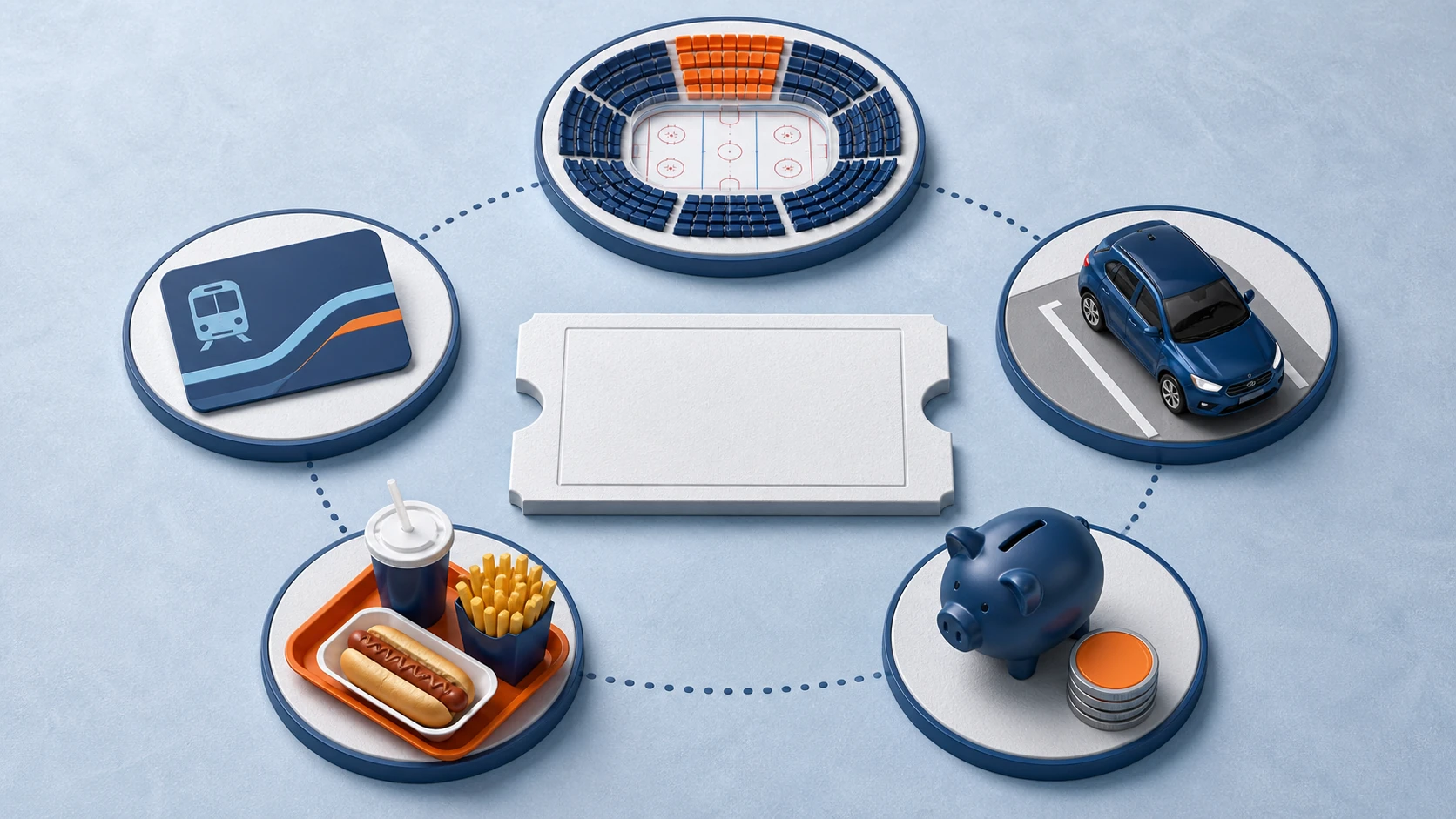
Write down both the party total and per-person total, including the check date. For a multi-game plan, calculate the usable per-game cost after removing dates you cannot attend. For travel, favor cancellable arrangements until the ticket is delivered and the game time is confirmed.
The confirmed 2026-27 NHL season window runs from September 29 through April 10 for the regular season. Use those boundaries for broad planning, then rely on the exact event and venue pages for local details.
A good NHL ticket price is not the lowest number on a screen. It is an authorized, usable seat whose final total fits the complete outing you value. Compare like with like, keep a backup game, and stop shopping once the verified package meets the budget you set.
Comments
Comments are reviewed before publication. Spam, abusive content and policy-violating links are not published.
Sign in with Google to leave a comment.
Loading comments...