Updated October 18, 2026. Carolina Hurricanes trade rumors begin with Alexander Nikishin, but his unresolved situation is not a completed transaction. The defending Stanley Cup champions also have decisions to make about defensive depth, the goalie succession after Frederik Andersen's departure and the opportunities available to developing forwards. Those decisions have different timelines. A solution that helps one part of the roster can create a new problem somewhere else.
This is a dated assessment of the reported Nikishin situation and the roster choices around it. The analysis below distinguishes reporting from our interpretation of team needs. It does not treat a proposed trade package as an offer that Carolina has made or received.
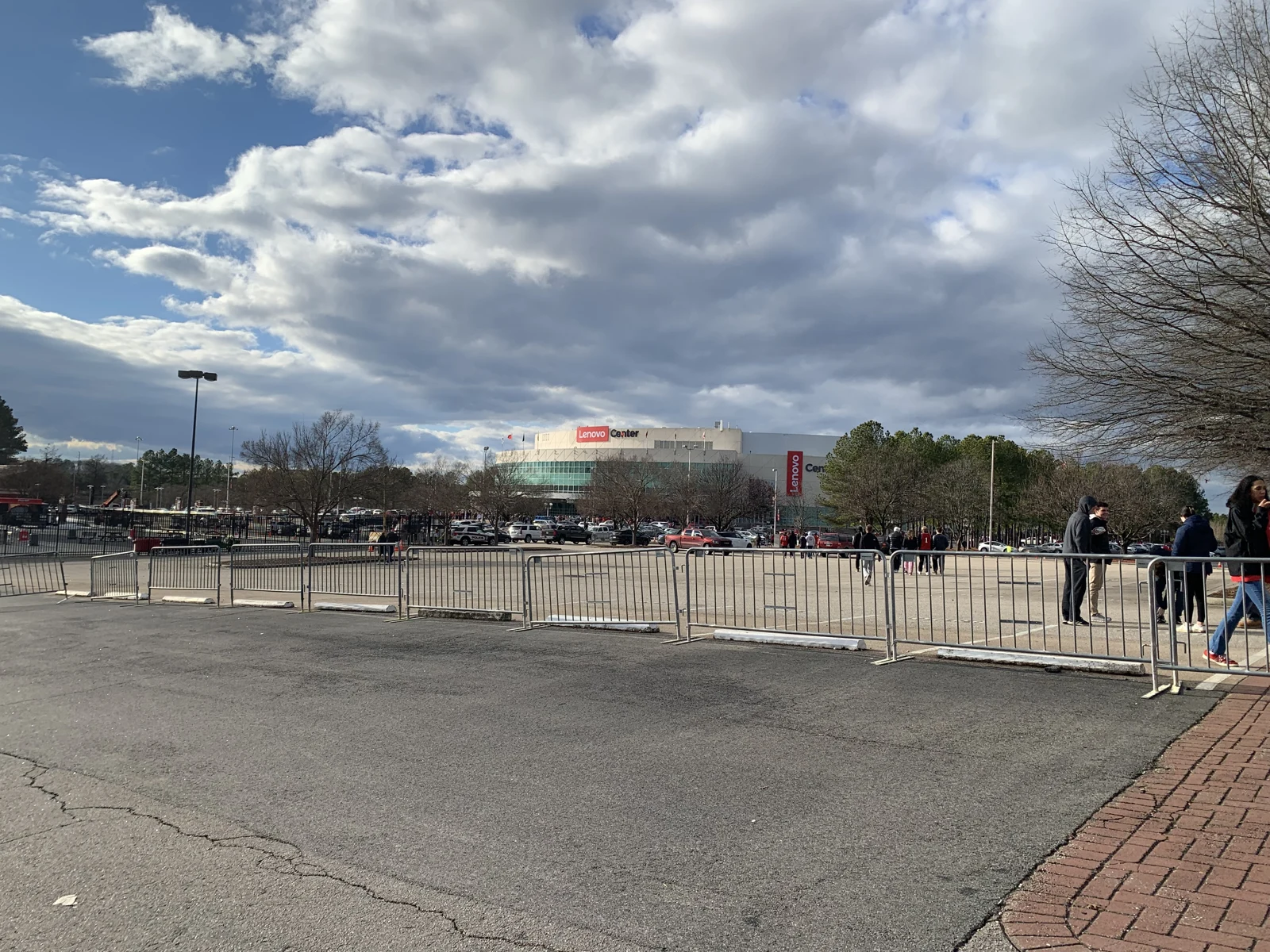
Cover: Lenovo Center in January 2025, by CavsFan45, CC BY-SA 4.0. Resized and converted to WebP.
Nikishin Is the Central Reported Question
Nikishin is a meaningful hockey asset rather than simply a convenient name for a trade generator. He produced 33 regular-season points in 2025-26, and his next step affects a defense built to support another championship attempt. Carolina's official contract tracker, checked October 18, still listed him as a restricted free agent. That is the starting point for evaluating the current discussion.
No Imminent Trade Does Not Mean the Situation Is Settled
On October 10, Sportsnet reported Elliotte Friedman's Saturday Headlines update: he did not see an immediate trade developing and considered a return to Carolina a possibility, with the contract still to be determined. That followed reporting that Nikishin had requested a move. It does not establish that the player and club have reached an agreement, nor does it establish that a specific outside team is about to acquire him.
Our interpretation is that the absence of an immediate trade increases the importance of the alternatives. Carolina can continue operating with its available defensemen while negotiations develop. Nikishin can still matter to the organization's future without occupying a current lineup spot. A quiet period is therefore relevant information, but it supplies neither a deadline for a transaction nor proof that the relationship has been repaired.
A Return and a Trade Solve Different Problems
A return would restore a player the organization already knows. The coaches could assess where his puck movement, physical play and defensive decisions fit with the existing pairs. A trade would convert that potential contribution into something else: perhaps help at another position, perhaps longer-term assets, or some combination. Those are different outcomes even if both are described casually as resolving the situation.
Our assessment is that the useful comparison starts with what Carolina would lose on the ice. Another forward could improve a particular line while leaving the defense thinner. A draft pick could retain future value without taking a shift during this repeat bid. Conversely, keeping a player on an unsuitable contract could limit later decisions. The task is to compare those consequences rather than assume that any return is preferable to continued uncertainty. No publicly verified package is required to recognize that trade-off, and none should be invented to make the discussion sound more advanced.
Carolina's Defense Needs to Be Evaluated as a Group
The October 13 lineup projection paired Slavin with Chatfield, Miller with Walker and Gostisbehere with Reilly. That structure matters more than simply counting the defensemen under contract. It shows the combinations Carolina was using while the Nikishin question remained unresolved. It also gives any proposed addition a specific lineup to improve.
Our assessment is that the evaluation should begin with the work each pair performs between possessions. Winning the puck is only the first step. A defenseman needs an outlet, the receiving forward needs support and the partner needs to protect against a turnover. If Carolina's forwards are leaving the zone before a controlled exit is available, another defenseman may inherit the same problem. If the issue is an individual defender's inability to make that first play under pressure, the acquisition case becomes more specific.
Reilly's place also needs to be viewed alongside the development options. The NHL's October 3 report recorded Charles Alexis Legault's assignment to Chicago. That creates a distinction between the immediate NHL lineup and the players who might help later. An assignment is not a declaration that a young defenseman has no organizational future. Regular work away from the NHL can be more useful than sitting behind an established pair.
For trade purposes, our preference would be to identify the missing assignment before selecting a name. Is Carolina seeking a player to absorb difficult defensive shifts, improve exits, cover an injury or change a special-team unit? Those requirements lead to different candidates and different costs. A prospective Nikishin return would also change the answer. Adding a defender first and resolving his situation later could leave Carolina with overlapping roles rather than a better group. Conversely, exchanging him without considering injury cover could make the organization more dependent on the health of the six already playing.
The Goalie Succession Changes the Trade Conversation
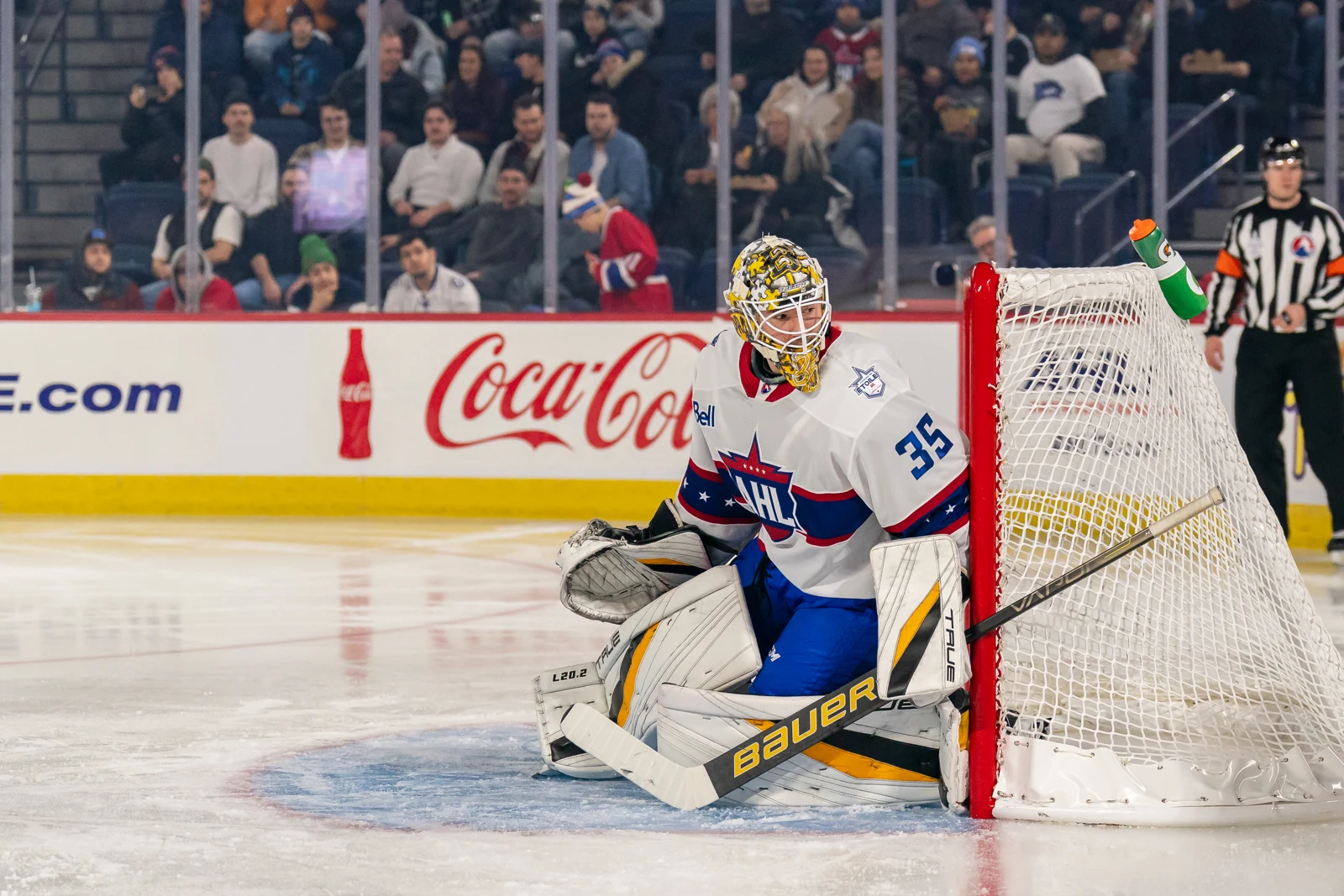
Andersen signed with Edmonton on July 1, leaving Bussi and Kochetkov as Carolina's tandem, as NHL.com's preseason questions report explained. That departure creates a different context from a team that has lost its only viable starter. Carolina is evaluating two goalies it already expects to use. An outside acquisition would need to improve that arrangement enough to justify its contract, acquisition cost and effect on playing time.
Our assessment is that a repeat contender should distinguish depth insurance from replacing the tandem. The former gives the organization another option when somebody is unavailable. The latter changes which goalie receives starts and how the team allocates future resources. A highly recognizable name can be attractive, but name recognition does not answer whether the new arrangement would produce a meaningful improvement over Bussi and Kochetkov together.
Bussi and Kochetkov Need a Workload Plan
Carolina's October 13 team report described a move toward the hot hand after alternating starts. That is a practical example of how the coaches can respond within the existing tandem. It is not a promise that the same pattern will last all season. A successful October choice still needs to survive travel, consecutive games and periods when one goalie is less sharp.
For fans assessing a goalie rumor, our suggested test is the role the newcomer would actually fill. Would he receive enough starts to stay ready? Would his arrival reduce useful work for one of the existing goalies? Would the team still have options if injuries changed the plan? These are roster questions specific to Carolina's succession, not an argument that the club should never upgrade. They explain why an addition needs a clearer purpose than simply replacing the familiarity Andersen supplied. The upcoming week's schedule is useful for following how that workload develops without assuming a fixed rotation.
Forward Injuries Create Opportunity Before They Create a Trade
The immediate absences have different outlooks. Carolina's October 16 update had Hall week to week and Jarvis not yet cleared. The Staal injury report estimated one to two months for his calf tear. Treating all three as one permanent hole would blur the decisions management actually faces.
Our assessment is that Staal's absence poses the most complicated role question. Filling an opening at center involves more than moving a winger into his line. The replacement must handle the middle of the ice, support the defense and fit with the other available centers. Jankowski and Kotkaniemi give Carolina ways to rearrange those responsibilities internally. A wing recall can then fill the opening created by that rearrangement. The team does not necessarily need to acquire a player whose position label matches the injured player's.
For the younger forwards, the opportunity is already tangible. The October 17 projection placed Nadeau with Stankoven and Blake, and Unger Sorum with Robinson and Kotkaniemi. Those combinations give the coaches different things to assess. Nadeau can be evaluated within an attacking line, while Unger Sorum has an opportunity to connect play with a separate group. A recall alone does not establish that either will remain in that spot after the injured players return.
The trade implication is practical. If those internal arrangements maintain the quality of Carolina's shifts, management can learn more before paying for outside help. If a particular responsibility remains uncovered, the case for an addition becomes stronger and more precise. A temporary replacement should also have a plausible role after recovery. Otherwise, Carolina could spend assets to solve an October problem and create a later competition for minutes that does little to improve the lineup.
That does not make injuries harmless. They reduce the margin for another absence and ask healthy players to carry different work. It means the acquisition decision should follow the actual demands on Aho, Stankoven, Jankowski and Kotkaniemi, alongside the progress of the recalled wingers. A familiar scorer added without a clear assignment would not automatically replace the work the missing players were doing.
Continuity and Development Have Value in a Repeat Bid
Staal's situation is a useful reminder to separate availability from organizational direction. His September extension runs through 2027-28. The injury changes the immediate lineup, but it does not turn his position into an announced permanent vacancy. A trade assessment built on an older assumption that this was necessarily his last season would start from the wrong premise.
Our assessment is that continuity has a practical value for this Carolina roster. Players who know the expectations can cover for one another while the coaches adjust combinations. That familiarity does not make them irreplaceable, and a championship does not exempt the roster from improvement. It does mean that a newcomer must contribute enough to justify the adjustment in responsibilities for the players around him.
The same calculation applies to prospects on defense. NHL.com's August prospect assessment recorded 38 NHL games for Joel Nystrom in 2025-26. That experience is different from a prospect who has yet to encounter the league's pace. It does not guarantee a permanent role, but it gives the organization another player whose development may have a direct connection to its NHL depth. Legault supplies another decision about where experience is best accumulated.
From a roster-building perspective, those players have two kinds of value: what another club might offer for them and what they might contribute if retained. The second should not disappear simply because trade discussion tends to focus on the first. If a developing defender becomes dependable depth, Carolina may avoid spending on that position later. If he is moved, the return should be measured against the future need the organization will still have to fill.
For Nadeau and Unger Sorum, the current recall opportunities provide a parallel test at forward. Their progress can change the quality and cost of the next acquisition decision. That is why giving a young player a usable role and evaluating the result can be part of an ambitious repeat bid, alongside making a trade when the improvement is clear.
What Would Make a Hurricanes Trade Worth the Cost?
Carolina's 3-2 win in Winnipeg extended its winning streak to seven and Jankowski's goal streak to six. The standings through October 17 had the Hurricanes at 7-1-1. Those are encouraging results for a team managing several absences. They also supply a useful reason to examine the existing solutions closely before deciding what an outside player must add.
Our assessment is that Jankowski's scoring should be appreciated without building the entire roster plan around a goal every night. His expanded opportunity can reveal lasting value even when the streak ends. If he continues to support his linemates, win useful possessions and let the coaches distribute the center workload effectively, Carolina retains a benefit beyond those goals. If the team begins depending on exceptional finishing to overcome recurring problems, the acquisition case will look different.
The goalie arrangement offers another immediate test. Carolina's October 18 Calgary preview expected Bussi to start after Kochetkov played in Winnipeg. The expectation is a pregame projection, but it illustrates why both goalies matter on the road. Management can evaluate the quality of that shared work while considering whether another option would meaningfully change the team's outlook.
For a potential forward addition, our test would be whether his role survives the return of Hall, Jarvis and Staal. A player who can contribute in more than one combination could provide useful depth throughout the season. A player who requires the same attacking minutes already reserved for Carolina's core would demand a larger reorganization. The cost should reflect that difference, including the opportunity another player would lose when everybody is available.
For a Nikishin transaction, the comparable test is what the new roster can do that the present organization cannot. Moving the uncertainty elsewhere is not itself an on-ice improvement. Retaining the player is also not automatically the best outcome at every possible contract. Carolina needs to compare the contribution it could restore with the contribution and flexibility an exchange could produce. That remains a hockey judgment even while the contract situation attracts most of the attention.
Follow the next NHL games for the changing lineup and the actual work being asked of each player. The strongest Hurricanes trade argument will identify a specific, persistent need and an addition that addresses it at an acceptable cost. Carolina's early success gives that assessment a meaningful baseline; it does not settle the Nikishin outcome or remove the possibility of improving a team that intends to compete for another Cup.
Comments
Comments are reviewed before publication. Spam, abusive content and policy-violating links are not published.
Sign in with Google to leave a comment.
Loading comments...