
Flyers fans’ frustration with Rick Tocchet began with a franchise-record nine-game winless opening and a familiar set of complaints: too little offense, limited reward from the power play, questions about young players’ opportunities and difficulty sustaining a lead. The response now has to be judged against newer evidence. Philadelphia was 3–7–3 entering October 27, 2026, after three consecutive wins followed by a loss to Anaheim. The team was no longer winless.
That improvement matters without making the opening problems disappear. The useful debate is which parts of the performance have changed, which decisions remain questionable and what a more convincing response would look like. Calls for a coaching change are one form of fan criticism; they are not evidence that a personnel decision has already been made.
The frustration began with nine winless games, but the record has changed
Philadelphia’s opening sequence reached 0–6–3 before its first victory. The first win came against Ottawa, 3–1, on October 17. Wins over Colorado and Buffalo followed before the Ducks ended that run. The October 24 result left the Flyers 3–7–3.
The public reaction was real. The Inquirer reported audible calls for Tocchet’s dismissal and the postponement of a season-ticket-holder event with the coaching staff. The club’s response acknowledged frustration. None of that establishes unanimous opinion among supporters or proves that the organization had decided to replace its coach.
Why 0–6–3 is different from 0–9–0
The distinction is small in typography and significant in the standings. An NHL record lists wins, regulation losses and overtime or shootout losses. Philadelphia had earned three points from those latter results during its first nine games. Writing 0–9–0 would erase them and describe a different record.
It is still reasonable to call nine games without a win a serious failure. The extra points do not turn defeats into victories or remove the offense’s problems. They simply describe how the games ended and the standings consequences. Accurate criticism does not need to make the opening worse than it was.
The same standard applies to the recovery. Three wins show a response, not proof of a completed turnaround. Ignoring them freezes the assessment at the angriest point; treating them as a cure ignores the larger record. The Flyers schedule provides the continuing results. This analysis uses the position before the October 27 Columbus game, so later outcomes should be evaluated as new evidence.
The offensive complaint is about more than unlucky finishing
Scoring slumps can include unlucky bounces, but the Flyers’ opening problems were not limited to shots failing to go in. The volume of opportunities and the ability to keep an attack alive also came under scrutiny. A team cannot assume that better finishing will solve a game in which it gives itself too few chances to finish.
Low shot volume leaves little room for mistakes
In the October 15 defeat at Detroit, Philadelphia managed 18 shots against the Red Wings’ 26, as documented in PhillyVoice’s account. That game is a concrete example of the complaint. With relatively few attempts reaching the opposing goaltender, a turnover or a missed assignment becomes harder to offset at the other end.
Shot totals still need context. A harmless attempt from distance and a chance created by moving the goaltender do not carry the same threat. Simply demanding shots from anywhere can produce a larger number without a better attack. The more useful questions are whether Philadelphia reaches dangerous areas, recovers the puck after an initial attempt and makes the opponent defend more than one action during a shift.
Those questions connect the offensive and defensive sides. An attack that ends immediately can send the same tired players back toward their own net. Cleaner exits, supported advances and a second possession in the offensive zone can reduce that burden. Calling the problem a lack of finishing alone skips the work necessary to create a repeatable chance.
The power play offers evidence of both failure and response
Before the first victory, the club listed its power play at 2-for-26, or 7.7 percent. That was an early-season snapshot, not the rate entering every later game. The failure to make opponents pay for penalties reinforced the broader frustration with generating offense.
There has since been a visible response. Michkov and Martone supplied first-period power-play goals against Anaheim. That development deserves credit even though Philadelphia lost the game. It shows why special teams and the final score should be assessed separately: improvement in one area can coexist with a costly failure somewhere else.
The next test is whether the power play continues to establish possession and create connected chances, rather than relying on a few successful finishes. A small number of goals can move an early percentage sharply. Sustained improvement would appear in entries, recoveries and puck movement as well as the conversion figure. Fans can criticize the original results while recognizing evidence that an adjustment is beginning to work.
Michkov’s role makes the development question unavoidable
Matvei Michkov is central to the debate because a team struggling for offense needs its creative players to contribute. His 13:40 of ice time in Detroit, reported by PhillyVoice, became a tangible basis for questioning usage. That was one game’s workload, not a season average, and it cannot establish every reason behind the coaching decision.
The later response is part of the evidence too. Michkov scored twice against Colorado, while Cole Knuble scored his first two NHL goals in Buffalo. Young players were contributing to victories, which complicates any blanket claim that they were uniformly denied a meaningful role.
Evaluate opportunity as well as total ice time
Minutes are a useful starting point because a player cannot create offense from the bench. They are not a complete description of opportunity. Power-play time, the score, linemates and the situations in which a player is trusted all influence what those minutes allow. A short shift with a clear offensive assignment can differ from a longer spell spent trying to escape the defensive zone.
That does not make criticism of usage invalid. It makes the criticism more precise. Ask whether the coach gives a skilled player repeatable opportunities to attack, whether mistakes are followed by clear instruction and whether the role allows the player’s strengths to matter. Those are observable questions. Claiming a private grudge or a broken relationship requires evidence that an ice-time number alone cannot provide.
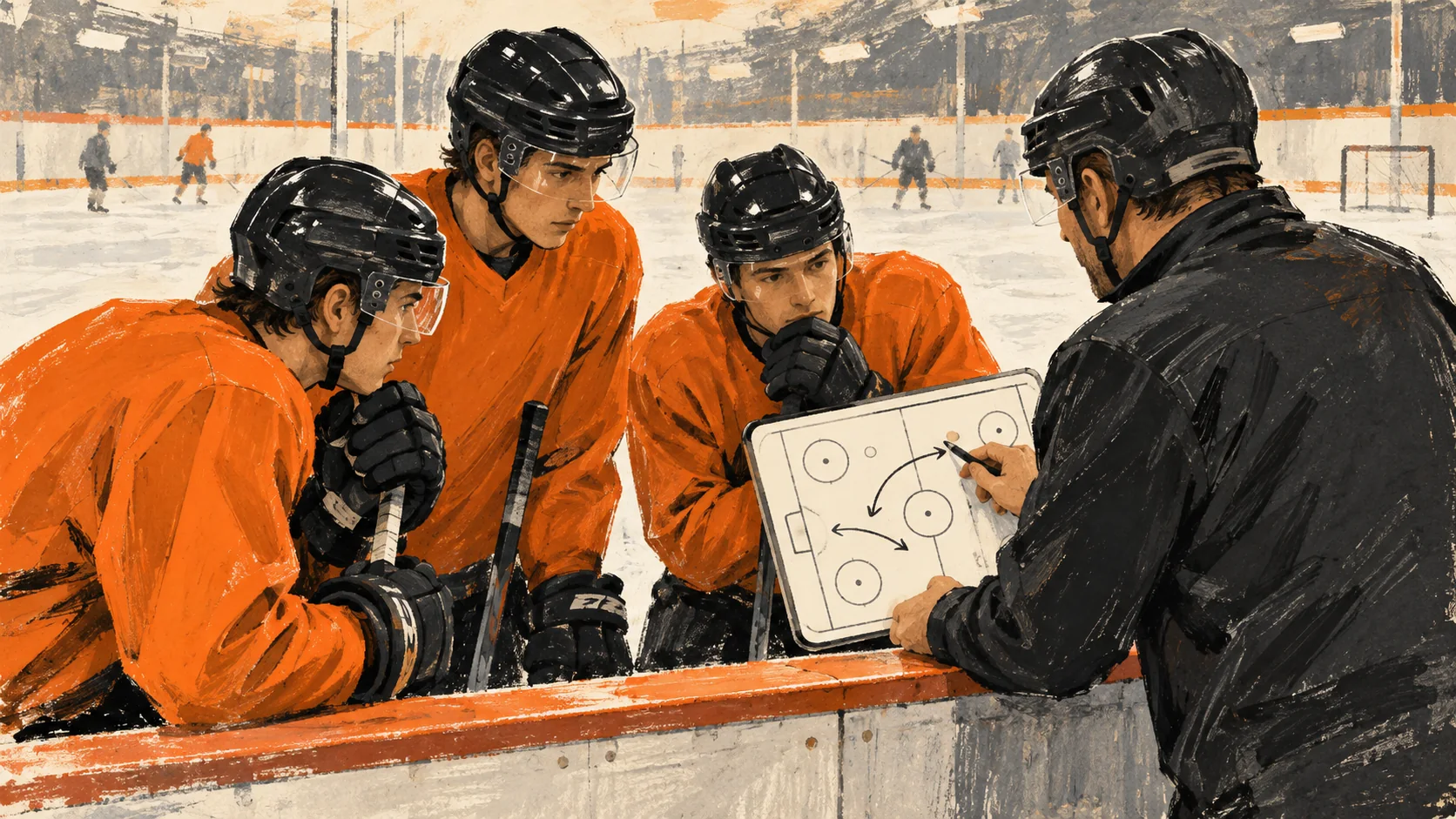
The right standard also applies beyond Michkov. A successful appearance by a call-up should earn consideration, but a goal does not settle every future lineup decision. Philadelphia needs a process that helps young players understand what sustains their opportunity while still requiring responsible execution. Supporters can expect that clarity without assuming that every decision they dislike reveals the coach’s motive.
Lost leads keep the pressure on Tocchet’s decisions
The Anaheim game renewed a different complaint: Philadelphia had opportunities to control the result and did not keep them. The Flyers led 2–0 and later 3–2 before losing 5–4. The current lineup review describes that sequence. It provides a reason to scrutinize what happened after a positive start, even though the offense had produced more than it did during the opening drought.
Different kinds of failure should not be combined indiscriminately. A game in which Philadelphia cannot create a lead and one in which it cannot maintain a lead raise overlapping but distinct questions. Against Anaheim, producing early goals was a success. Keeping the opponent from turning the game was the problem that followed. A balanced assessment preserves both observations.
Protecting a lead still requires possession
Leading does not remove the need to move the puck and make the other team defend. Safe play is not automatically the same as surrendering possession. Supported exits, manageable shifts and an attack that can recover the puck help a team limit the opponent’s opportunities without making every decision an aggressive gamble.
For the coach, the questions involve the players selected for a situation, the instructions given and whether a failing approach is adjusted. For the players, the questions involve winning the next battle, making the available pass and avoiding the turnover that gives an opponent another attack. An error can expose a coaching decision without proving that the decision itself caused the error.
Nor can the scoreboard establish that Tocchet ordered his team to retreat. That would require direct evidence about the instruction and the actual sequence. The visible result supports examining possession and execution after the lead. It does not justify inventing a private command to explain every lost advantage.
Fans are therefore right to look beyond the first period when judging progress. A stronger opening matters, but it has to connect to a sustainable second and third period. Philadelphia’s response becomes more convincing when its successful stretches last longer and survive an opponent’s push, rather than disappearing after one difficult shift.
What belongs to the coach, and what belongs to the roster
A coach is responsible for the approach used by the players available to him. That includes preparing the team, defining assignments, selecting combinations and responding when an opponent finds an advantage. It does not mean he controls every pass, bounce or individual mistake. Accountability becomes more useful when it identifies a repeated problem that preparation or deployment could reasonably address.
Availability also matters. Philadelphia’s Colorado win came with five regulars injured, a circumstance documented in the NHL recap. That is historical context for that game, not a claim that all five remained unavailable on October 27. It illustrates why an assessment of line combinations must begin with who could actually play rather than an ideal lineup assembled without regard to injuries.
Roster construction presents another layer. The front office supplies the mix of skills and depth; the coach decides how to use it. A team lacking an available option cannot solve the problem by writing a different name onto the lineup card. Conversely, limited depth does not excuse an approach that repeatedly fails to use the strengths of the players who are available.
Execution belongs in the same discussion. A turnover under little pressure and a turnover caused by a player having no supported option can look similar at the moment possession changes. They invite different corrective actions. The first may require an individual improvement; the second may require clearer support or an adjustment in how the group moves together. Full sequences provide a better basis for criticism than the last frame of the mistake.
This division of responsibility is an analytical framework, not a defense of every Tocchet decision. The 0–6–3 opening warranted scrutiny. The three wins warranted recognition. The next judgment should ask which recurring failures are being corrected, which remain and whether the staff can demonstrate a workable response with its actual roster. A demand for accountability is strongest when it names the job that has not been done.
What would make the next response convincing?
The next sequence begins with Columbus on October 27 and a trip to Washington the following night. That schedule gives Philadelphia opportunities to show whether better stretches of play can be repeated. It does not establish a specific number of wins that would automatically settle the coaching discussion. Results matter, but the problems that produced the opening run require more than one favorable scoreboard.
A watchlist for the next Flyers game
Start with how the team moves through the ice. Do exits connect to supported attacks, or does possession immediately return to the opponent? Then look for second chances in the offensive zone. A shift that produces sustained pressure is more informative than a single harmless shot added to the total after the opponent has controlled the previous minute.
On the power play, follow the work before the goal. Can Philadelphia establish its shape, recover a clearance and force the penalty killers to move? When watching Michkov and the other young forwards, note whether their roles create useful attacking opportunities. A goal or an error is worth seeing in the context of the whole shift and the opportunities that follow.
Finally, watch what happens after Philadelphia takes a lead or concedes a goal. Does one difficult stretch become several, or can the team reset and regain possession? That is the connection missing when a promising first period ends in another frustrating result. A visible correction would give supporters a firmer reason to believe in the response.
The weekly schedule and today’s games page provide current viewing details. Use the team calendar options for planning, then verify the actual lineup before evaluating that night’s choices.
The central criticism of Tocchet is understandable: the Flyers need more reliable offense, a clearer return from their available talent and a stronger response when a game changes. The three wins provided evidence of an answer; the Anaheim loss showed why the questions persist. Philadelphia’s next task is to make the improved elements repeatable enough that fans can see progress across a full game, rather than being asked to trust that it is coming.
Comments
Comments are reviewed before publication. Spam, abusive content and policy-violating links are not published.
Sign in with Google to leave a comment.
Loading comments...