Seattle announced on October 25 that Jared McCann would be out for ten weeks with a lower-body injury and had been placed on injured reserve. The absence removes an established scorer from the Kraken’s lineup and creates connected decisions about Kaapo Kakko, Jani Nyman and the power play. It is a substantial interruption, rather than a confirmed date on which McCann will automatically return.
This October 27 analysis separates the club’s injury update from the lineup choices that follow. Seattle can fill McCann’s roster spot immediately. Replacing the work he performs across different situations will require more than putting one new name beside Matty Beniers and Jordan Eberle.
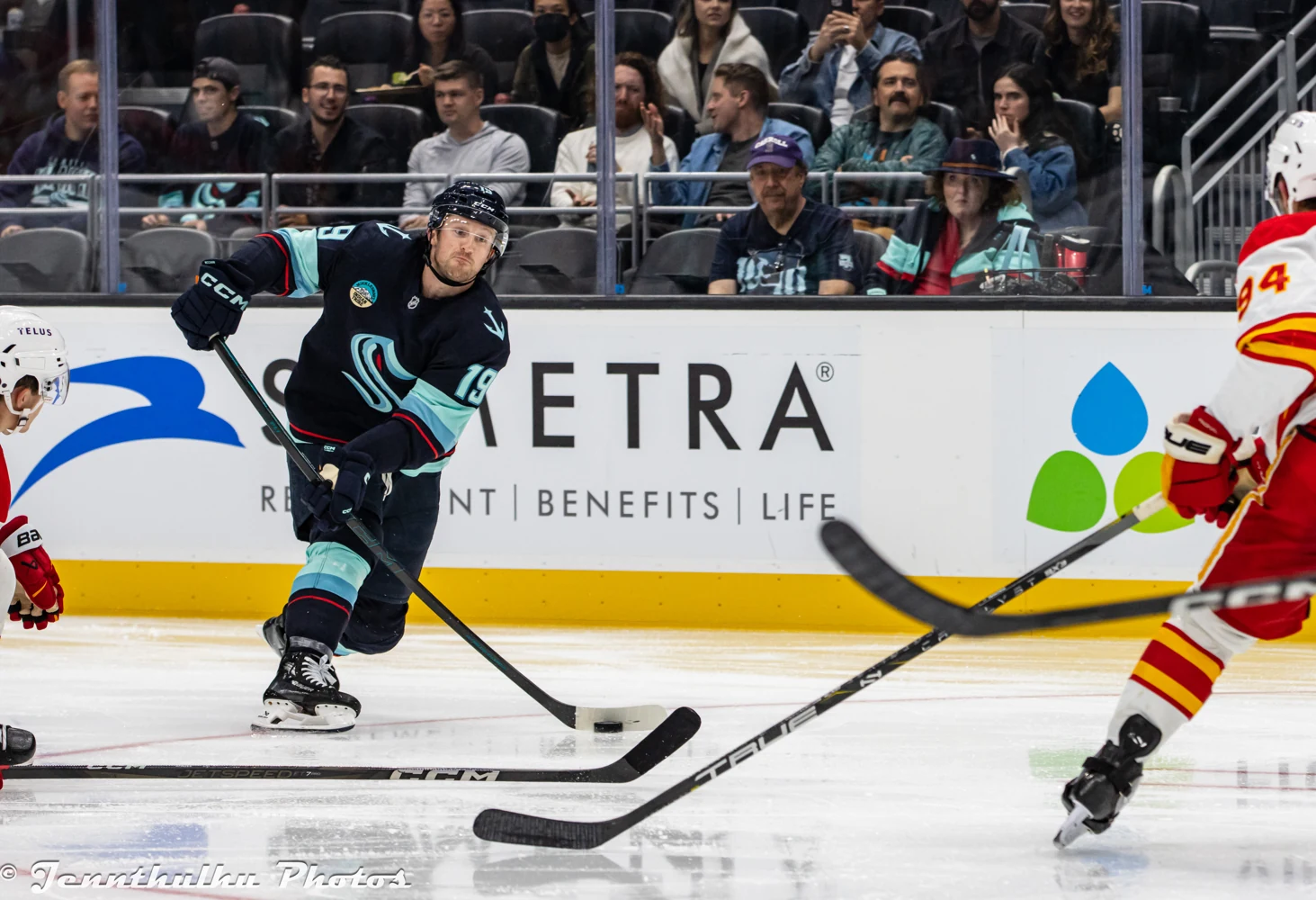
Cover: McCann in a September 22, 2024 preseason game, not the 2026 injury. Jenn G, via Wikimedia Commons, CC BY-SA 2.0. Resized and converted to WebP; same license.
What has Seattle confirmed about McCann’s injury?
The NHL’s status report confirms the ten-week absence and injured-reserve placement announced by the Kraken on Sunday, October 25. It reports that McCann was injured during Seattle’s 5–3 victory against Utah on Thursday, October 22. He then missed the 5–1 loss to Minnesota on Saturday, October 24.
The timing explains why the news surprised fans who had seen him complete the Utah game. FOX 13 Seattle reported that he finished that contest with his usual linemates. Completing a game and later being unavailable are compatible facts. They do not establish exactly which play caused the injury or what a subsequent examination found.
Ten weeks is an estimate, not a booked return game
A ten-week window from late October points broadly toward the beginning of January if recovery follows the announced timetable. It does not name an opponent, guarantee a particular return night or specify how many games McCann will ultimately miss. The meaningful future announcement will be his clearance and availability, followed by the team’s decision to use him.
For fans planning around the absence, the best approach is to treat the estimate as the current scale of the problem. Seattle needs a sustained lineup solution covering many weeks, rather than a one-game substitute. A later update may refine that window. There is no need to convert it into a precise countdown before the club supplies the next information.
The public description remains a lower-body injury. That broad label does not identify a bone, ligament or specific treatment. Observations about crutches and the fact that McCann finished a game cannot fill in those medical details. The confirmed information is enough to evaluate the hockey consequences without assigning a diagnosis or reporting a surgery that has not been announced.
What does Seattle lose beyond eight early-season points?
McCann had three goals and five assists in 11 games before the absence. Those eight points describe his opening contribution, but the reason the injury matters extends beyond that small total. Seattle is losing a forward with several seasons of evidence that he can supply offense at NHL level. His replacement must take on future assignments, not merely reproduce points already scored.
The official NHL record shows the range. McCann scored 40 goals and 70 points in 79 games in 2022–23. He produced 61 points in a full 82-game 2024–25 season, then 20 goals and 40 points in 52 games in 2025–26. That history supports calling him an established offensive contributor without assuming his 40-goal season is the automatic expectation every year.
It also shows why the burden should be distributed. Asking one recalled player to replace a veteran’s scoring history, familiarity with teammates and special-teams contribution all at once is a demanding standard. Seattle can instead divide the responsibilities: a different winger on the top line, another option in the shooting rotation and more offense from combinations that were already working.
The previous season’s shorter appearance total is relevant to the challenge of maintaining depth. It does not establish that this injury is a recurrence of a specific earlier condition. The hockey lesson is about having alternatives when a significant player becomes unavailable. The medical relationship between separate absences cannot be inferred from season totals.
The immediate test will be whether Seattle can continue creating chances that suit its available players. If a new combination keeps the puck and produces repeatable opportunities but does not score in its first outing, that is a different problem from a line that spends most of its shifts chasing. McCann’s absence makes the quality of the replacement work more important than a simple comparison of individual point totals.
Why does Kakko’s promotion change more than the first line?
The first adjustment was straightforward to identify, but its consequences reach down the lineup. Moving an effective player into McCann’s place also removes him from a different combination. Seattle must assess the result across its forward group, rather than judging the change only by whether the new top line scores.
The Beniers–Eberle assignment is the immediate move
Sportsnet reported that Kakko moved into McCann’s top-line spot alongside Beniers and Eberle. That gives the Kraken a concrete starting response. It is an observed change from the first game without McCann, rather than a promise that the trio will remain together for the entire absence.
Kakko can use the assignment to show how his game works with those teammates and with the opportunities their line receives. More ice time can create more chances to contribute, but the combination still has to establish who retrieves pucks, who provides support through the neutral zone and who reaches scoring areas. Filling the same place on a lineup graphic does not make the new winger an identical player.
The line Kakko leaves also needs an answer
In his Sound of Hockey notebook, Darren Brown described Kakko’s earlier work with Shane Wright and Berkly Catton, along with Ryan Winterton’s elevation from the fourth line as the group adjusted. That creates another evaluation: whether the younger combination can preserve its pace and puck movement with a different partner.
The opportunity cost matters. If the top line improves while a previously useful depth line loses its effectiveness, the overall gain may be smaller than the first change suggests. Conversely, a player who handles the newly available minutes could allow the staff to keep several combinations productive. This is why Seattle’s response is best understood as a chain of assignments.
The Minnesota loss does not settle those questions. One game can expose issues worth correcting without proving that an injury has caused every mistake. Seattle’s staff has to distinguish the missing player’s contributions from puck management, defensive coverage and execution that still belong to the healthy group. The reshuffle gives the next games a clear purpose: determine which combinations function together over repeated shifts.
What opportunity does Nyman’s recall create?
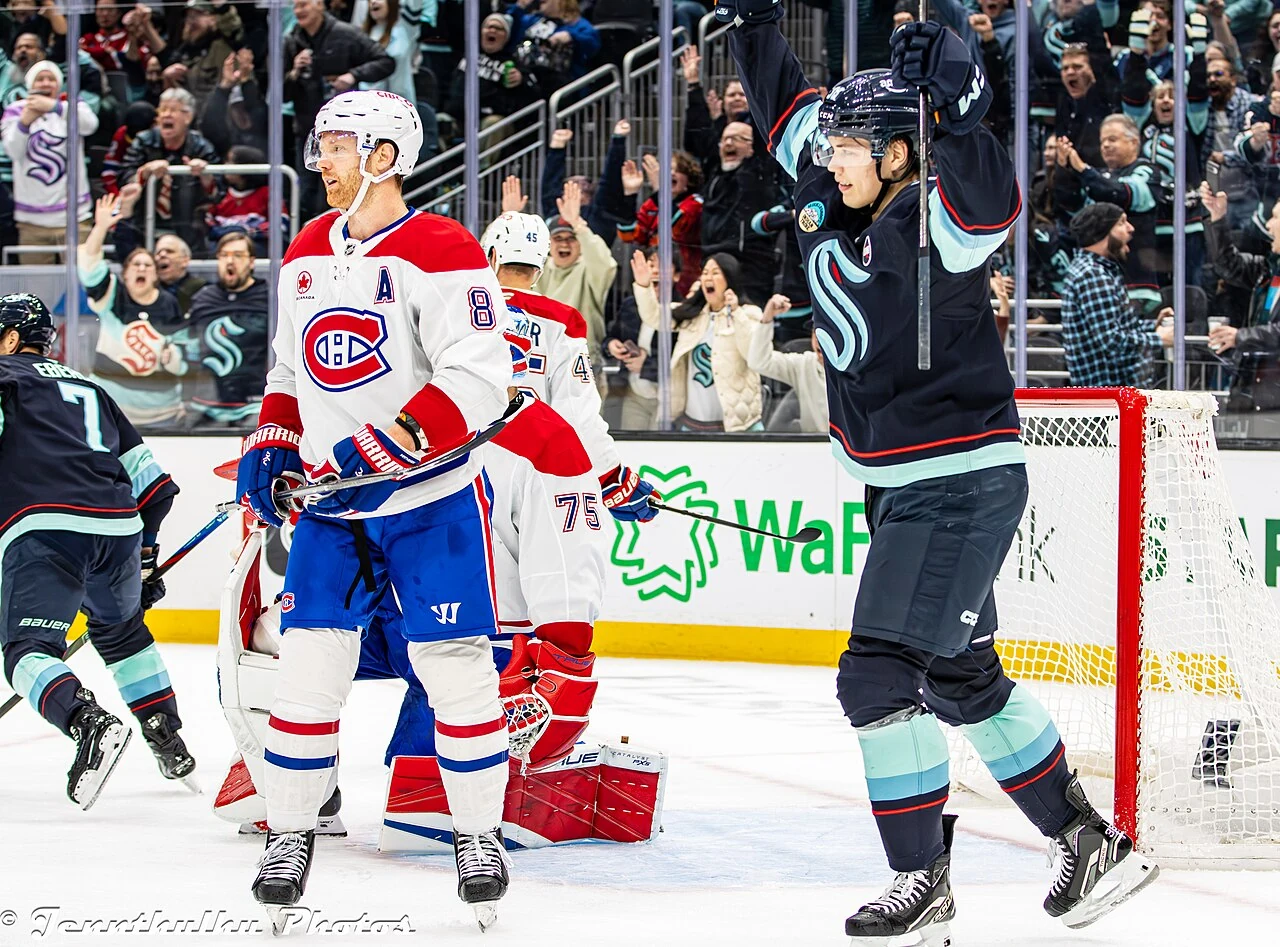
The Kraken’s official transactions list records Nyman’s recall from Coachella Valley on October 24. He gives Seattle an internal option at a time when the forward group needs another contributor. The recall fills an availability need; his role will depend on how the coaches deploy him.
A scoring case still has to become usable NHL minutes
Nyman brought an immediate scoring argument. FOX 13 Seattle reported nine goals in nine AHL games at the time of the recall. He also has an NHL base: seven goals and six assists in 40 career games, according to the league’s record. That combination makes him more than an unfamiliar emergency name.
The AHL pace should not become a promise of a goal per game in Seattle. NHL defenders close space more quickly, and a recalled player may receive fewer offensive touches or different linemates. The value of the nine-goal start is that it identifies a player arriving with recent scoring success. It gives the team a reason to test how that skill can help at the higher level.
Minutes will determine how meaningful the test becomes. A lineup appearance with little offensive opportunity answers a different question from regular shifts with playmakers or time on a power-play unit. Fans should look at where Nyman is used and what responsibilities accompany the ice time, rather than treating the recall itself as proof that he has inherited McCann’s entire role.
There is room between making Nyman an immediate top-line replacement and expecting nothing from him. Seattle can give him a defined task, evaluate his execution and expand the assignment if he handles it. His shooting may help one part of the offense while Kakko and other forwards cover different responsibilities. That would allow the roster response to develop from several contributions instead of depending on a single direct substitute.
How should Seattle replace McCann on the power play?
McCann’s special-teams contribution makes this a separate decision from the even-strength lines. He had two power-play goals and three power-play points in his first 11 games this season. In 2025–26, seven of his 20 goals came on the power play. Seattle is therefore losing a demonstrated source of scoring with the extra attacker, not merely an additional forward available for the unit.
Replacing a shooting threat is different from filling a position
A useful power play needs several connected jobs performed: entering the zone, recovering loose pucks, moving defenders and getting the shot away before the lane closes. A new player can stand in McCann’s previous area without making opponents defend it in the same way. The assignment should fit the replacement’s strengths and the movement of the other four players.
The Minnesota game supplied a specific example of an alternative route. In the NHL’s recap, Catton scored after a passing sequence involving Montour and Kakko. Kakko explained that Minnesota’s pressure could leave space lower in the zone. Crucially, the goal arrived one second after the power play expired, so it should not be counted as a power-play goal. The sequence still illustrates how a unit can create a chance by moving the puck toward available space.
Nyman’s recent scoring makes his use worth watching, but it does not announce him as the first unit’s new shooter. Seattle can test different combinations and locations. The useful measure is whether the players create an open attempt, recover the puck when needed and sustain pressure after the first play breaks down. A scoring drought or one successful finish will not explain all of that work on its own.
Does the injury force Seattle to make a trade?
No replacement trade follows automatically from the injury. Seattle’s announced immediate response included the internal recall of Nyman, and the coaches have already adjusted the forward combinations. That does not reveal every conversation the front office may have, but it establishes that the roster has options to evaluate before any outside addition.
The relevant question is which responsibility remains uncovered. If the team can maintain its top-line play but lacks a reliable power-play shot, that points to a different need from a broader inability to create offense at even strength. Acquiring another forward only helps if his game addresses the actual gap. The cost in players or future assets would also have to make sense beyond the first uncomfortable week.
McCann’s expected return adds another consideration. A move designed solely for the immediate absence could create different lineup choices when he becomes available. The Seattle schedule gives fans the calendar context, while the club’s updates will determine the actual health timeline. Those two sources answer different parts of the planning problem.
Injured reserve should also be described accurately. The announcement confirms McCann’s IR status; it does not, by itself, announce a long-term injured-reserve decision or an amount Seattle can spend on a replacement. The injury timetable, roster response and any salary-cap transaction are separate pieces of information. Treating all three as one automatic outcome would overstate what the Kraken have said.
What should fans watch over the next few games?
Seattle’s next scheduled game is at home against Toronto on October 28. The weekly NHL schedule puts that assignment and the surrounding slate in view. The useful questions begin with the confirmed lineup: does Kakko remain beside Beniers and Eberle, where does Nyman enter the rotation and how are the other forward combinations organized?
Then look beyond names. Track whether the changes provide sustained offensive-zone time, usable shooting chances and support for the defense when possession turns over. Lambert wanted more offense after the Minnesota loss, but that game also included mistakes leading to breakaways. Scoring help alone cannot resolve every problem exposed in a 5–1 result.
The power play deserves its own observation. A player’s presence on the first line does not automatically mean he has the largest special-teams role. The staff may distribute those opportunities differently. Repeated use across several games will tell fans more about the intended solution than a single practice arrangement or one brief shift.
For following the longer window, choose Seattle through the team calendar page. A subscription can refresh the dates; a downloaded calendar is a one-time snapshot. Neither acts as an injury-clearance feed, so pair the schedule with team health updates rather than attaching a guaranteed comeback game to the ten-week estimate.
McCann’s absence creates a difficult stretch and a real opportunity to learn about Seattle’s depth. Kakko can establish his fit higher in the lineup, Nyman can turn his recall into a useful assignment and the remaining units can develop ways to generate offense together. The quality of those responses will be clearer over several games than it was on the first night without him.
Comments
Comments are reviewed before publication. Spam, abusive content and policy-violating links are not published.
Sign in with Google to leave a comment.
Loading comments...