
The NHL playoff format sends 16 teams into a fixed, mostly division-based bracket. Eight teams qualify from the Eastern Conference and eight from the Western Conference. Every matchup is a best-of-seven series, and a team must win four rounds to lift the Stanley Cup.
That quick answer leaves out the part that confuses many fans: wild cards do not simply become the seventh and eighth seeds in a normal conference bracket. They are assigned to division-based bracket lanes, and those lanes stay intact through the second round. This guide explains the current system as verified against the NHL’s official playoff format on July 27, 2026.
How Many Teams Make the NHL Playoffs?
Sixteen of the NHL’s 32 teams qualify for the Stanley Cup Playoffs. The field is divided evenly by conference, so eight Eastern teams and eight Western teams advance. Qualification combines guaranteed division positions with conference-wide wild cards.
| Qualification route | Teams per conference | Teams leaguewide |
|---|---|---|
| Top three in each division | 6 | 12 |
| Two wild cards by conference record | 2 | 4 |
| Total playoff field | 8 | 16 |
The top three finishers in the Atlantic, Metropolitan, Central and Pacific Divisions account for the first 12 berths. After those places are filled, the next two best teams in each conference qualify as wild cards, regardless of division. That means one division can place five teams in the postseason while the other sends only three.
Regular-season games therefore affect more than whether a club gets in. They also determine division position, wild-card order and home ice. Fans following the race can use the full NHL schedule alongside the official standings.
How First-Round Matchups Are Built
The NHL starts with four division-centered bracket lanes, two in each conference. The division winners receive a wild-card opponent, while the teams that finished second and third in each division play one another.
| First-round host | Opponent |
|---|---|
| Conference’s better division winner | Lower-ranked wild card (WC2) |
| Other division winner | Higher-ranked wild card (WC1) |
| Second-place division team | Third-place team from the same division |
The wild-card assignment can create a crossover. For example, a team from one division may enter the bracket headed by the other division’s winner. Once assigned, that team follows its bracket lane; it does not automatically move back to its own division for the next round.
Why WC1 does not always face the top conference team
WC1 is the wild-card club with the better regular-season record, so it receives the less difficult assignment on paper: the other division winner. WC2 faces the division winner with the better conference record. This is why reading the labels as ordinary No. 7 and No. 8 seeds can produce the wrong matchup.
The NHL Uses a Fixed Bracket, Not Reseeding
After the first round, the NHL does not rank all surviving teams again. Instead, the two winners in each division-based bracket play each other in the second round. The winners of those second-round series advance to their respective Conference Finals, and the Eastern and Western champions meet in the Stanley Cup Final.
- First Round: eight series reduce the field from 16 teams to eight.
- Second Round: four series produce two finalists in each conference.
- Conference Finals: the remaining Eastern teams meet, as do the remaining Western teams.
- Stanley Cup Final: the conference champions play for the Cup.
A fixed bracket matters because the strongest remaining regular-season team does not necessarily draw the lowest-ranked survivor. Fans can trace each possible route as soon as the opening bracket is set. Upsets change the team moving forward, but they do not redraw the lane.
How a Best-of-Seven Series Works
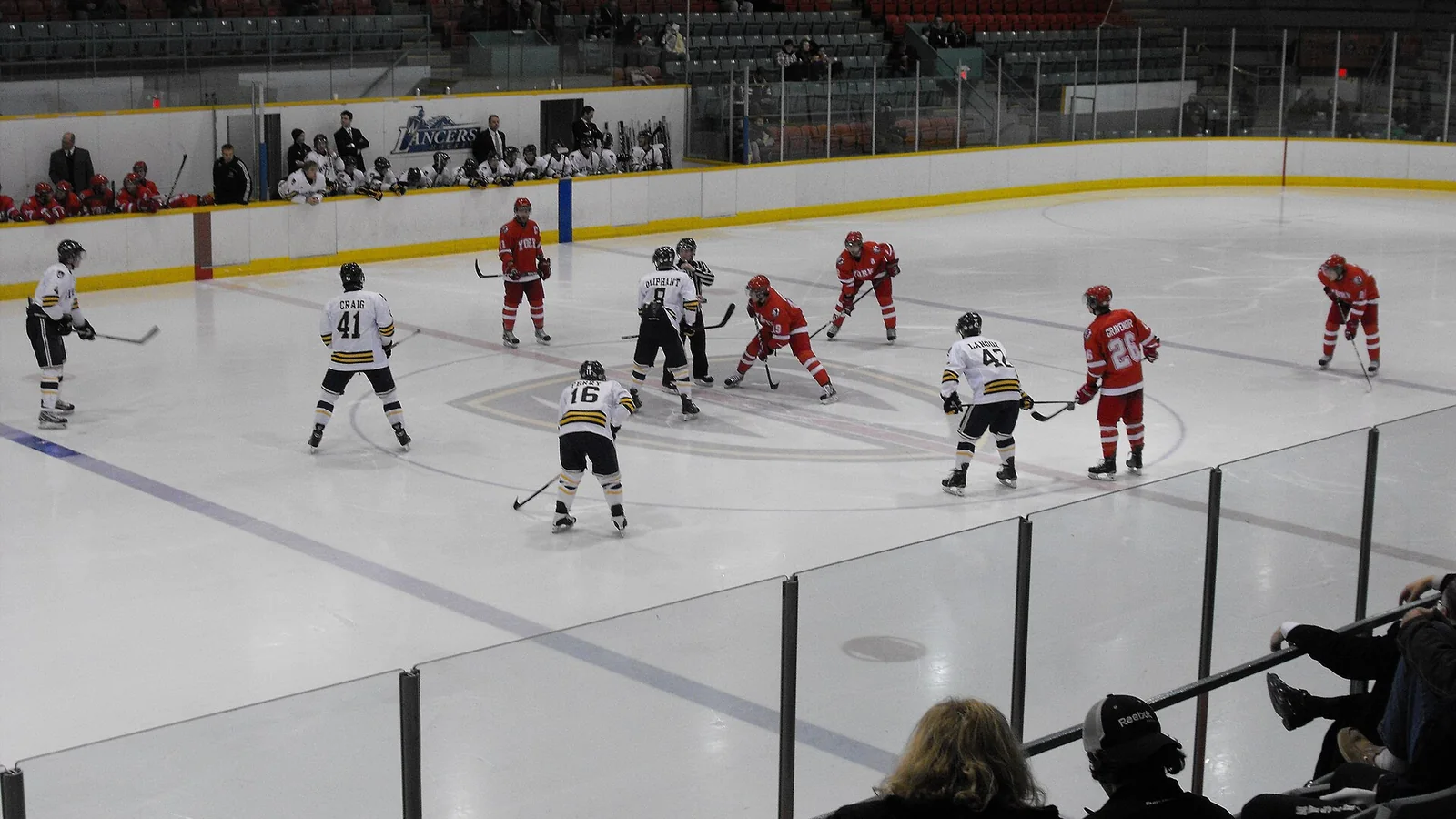
All four rounds use the same basic contest: the first team to win four games advances. “Best of seven” describes the maximum length, not a promise that seven games will be played. A sweep ends after four games, while Games 5, 6 and 7 are used only when necessary.
The usual venue sequence is 2-2-1-1-1. The team with home-ice advantage hosts Games 1 and 2, the opponent hosts Games 3 and 4, and the sites alternate for Games 5 through 7 if those games are required. The order gives the home-ice team as many as four home dates, including a possible Game 7.
How many wins does a Stanley Cup champion need?
A champion needs 16 playoff wins: four series victories multiplied by four game wins per series. The shortest possible run is 16 games, achieved by sweeping every round. The longest possible run is 28 games if all four series reach Game 7.
Who Gets Home-Ice Advantage?
Home ice is not determined by a fresh seed after every round. In the first two rounds, it goes to the team that placed higher in the regular-season standings within the applicable matchup. A division winner therefore begins its opening series at home, and a second-place team hosts the third-place team.
For the Conference Finals and Stanley Cup Final, the NHL compares the teams’ regular-season records. The club with the better record receives home ice regardless of its division finish or the bracket label it carried in Round 1. Home ice controls the venue order; it does not provide an extra win or change the best-of-seven requirement.
How NHL Playoff Overtime Works
A tied playoff game does not go to a shootout. Teams continue playing full 20-minute, five-on-five sudden-death overtime periods until someone scores. The first overtime goal ends the game, no matter how many extra periods are needed.
This differs from the regular season, where overtime is shorter, played three-on-three and can be followed by a shootout. In the playoffs, every game produces a winner through team play, which is why postseason start times can be certain while ending times cannot.
How to Follow the Bracket and Game Schedule
The bracket answers who can advance where; a schedule answers when the next game takes place. Keep those jobs separate. Check today’s NHL games for the current slate or use this week’s NHL schedule to plan several days ahead.
Fans who prefer saved dates can use the NHL calendar. The printable NHL schedule is useful for an offline overview. Those tools carry changing game information; this article remains an explanation of the bracket rules.
NHL Playoff Format FAQ
Does the NHL reseed teams after each round?
No. The current NHL postseason uses a fixed, mostly division-based bracket. First-round winners within a bracket meet in Round 2 rather than being rearranged by regular-season record.
How many wild-card teams make the playoffs?
Four teams qualify as wild cards: two from the Eastern Conference and two from the Western Conference. They are the best conference records remaining after the top three teams in each division qualify.
Are all NHL playoff rounds best of seven?
Yes. The First Round, Second Round, Conference Finals and Stanley Cup Final are all best-of-seven series. Four game wins are required to advance from each round.
Can five teams from one division make the playoffs?
Yes. Because wild cards are selected by conference record rather than reserved one per division, one division can send five teams while the other sends three.
How many games can a Stanley Cup champion play?
A champion plays at least 16 games and at most 28. The exact total depends on how many games are needed to win each of the four series.
Comments
Comments are reviewed before publication. Spam, abusive content and policy-violating links are not published.
Sign in with Google to leave a comment.
Loading comments...