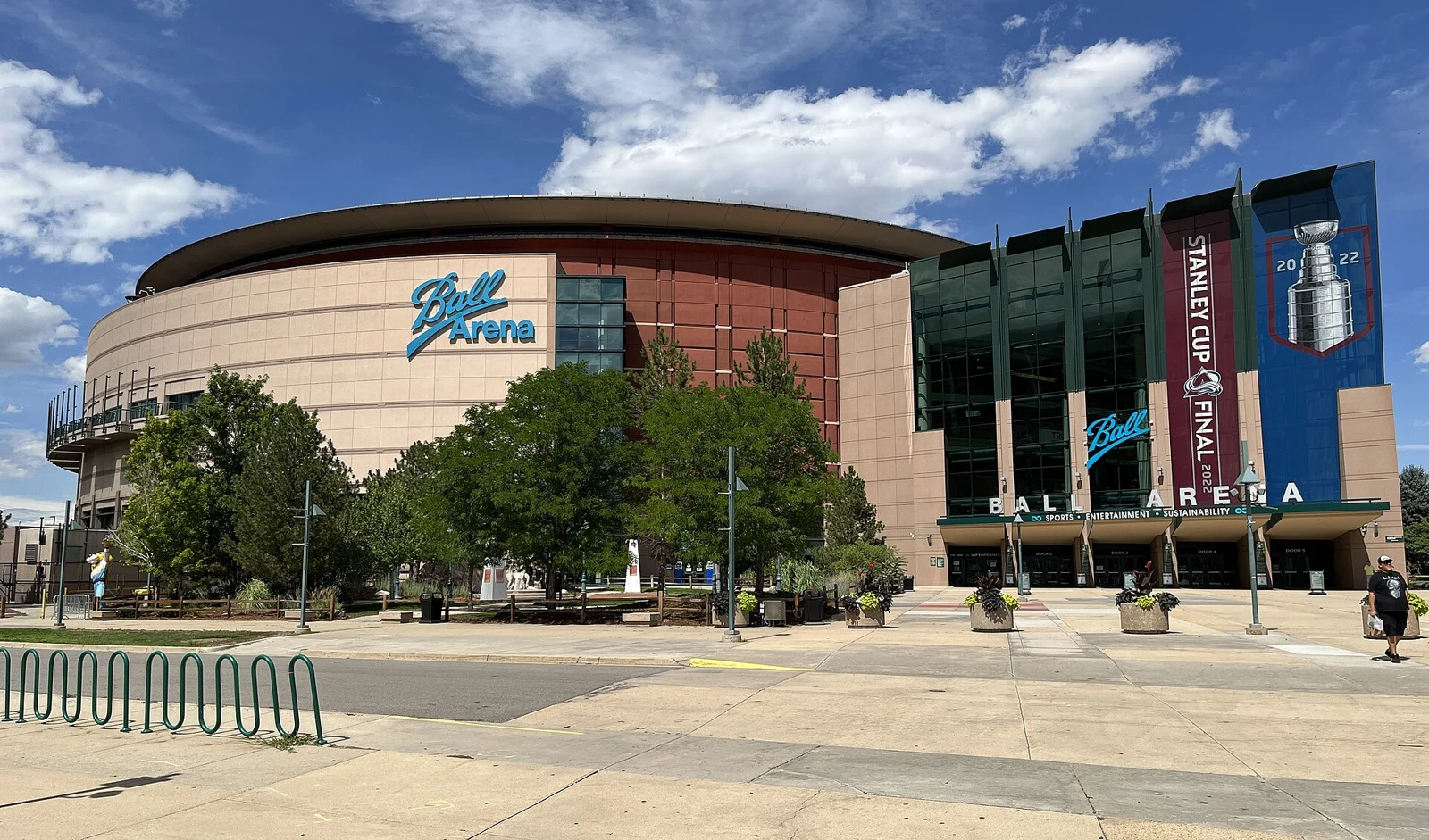
Download and print the 2022 NHL playoff bracket
Colorado won the 2022 Stanley Cup, defeating Tampa Bay four games to two. Use this printable 2022 NHL playoff bracket PDF to keep the complete tournament on paper. It includes a worksheet with the original opening matchups and a separate completed results page covering all fifteen series.
The resource covers the completed 2021-22 season's playoffs. It is useful for a historical replay, a classroom explanation of tournament progression or a personal archive. For an upcoming game calendar rather than this past tournament, choose the site's current printable NHL schedule.
Choose the worksheet or completed results
Print page one if you want the sixteen starting teams with later rounds left open. You can predict the survivors before watching old games, or reconstruct a remembered series without seeing the answer key. The worksheet preserves the actual opening pairings; it does not ask you to build a new tournament from a modern standings table.
Page two supplies the completed bracket, including each series winner, its game-win total and Colorado's championship. Keep that page separate if you want a replay exercise without revealing later outcomes. This article discusses the results openly, so readers avoiding spoilers should download the worksheet and leave the rest for afterward.
Print settings that keep the bracket readable
The PDF uses landscape US Letter pages. Select landscape orientation and print at actual size on Letter paper; choose fit to printable area if your printer clips the edges or if you use A4. Black-and-white printing is sufficient because the bracket uses text and connecting lines, with no team-logo colors needed to identify a matchup.
Choose a page range of one or two if you only need the worksheet or the answer key. Both pages have the same underlying routes, making it easy to compare a penciled prediction with the finished tournament. Save the file locally before printing if your browser's print preview compresses the diagram unexpectedly.
The sixteen teams and their original bracket lanes
The 2022 playoffs began on May 2. Sixteen clubs entered, split evenly between the Eastern and Western Conferences. The worksheet keeps the original lanes together so that winners from each paired row feed into the correct second-round matchup.
| Bracket lane | Opening matchup | Next-round connection |
|---|---|---|
| East, Atlantic side | Florida vs. Washington | Winner of Toronto-Tampa Bay |
| East, Atlantic side | Toronto vs. Tampa Bay | Winner of Florida-Washington |
| East, Metropolitan side | Carolina vs. Boston | Winner of Rangers-Pittsburgh |
| East, Metropolitan side | New York Rangers vs. Pittsburgh | Winner of Carolina-Boston |
| West, Central side | Colorado vs. Nashville | Winner of Minnesota-St. Louis |
| West, Central side | Minnesota vs. St. Louis | Winner of Colorado-Nashville |
| West, Pacific side | Calgary vs. Dallas | Winner of Edmonton-Los Angeles |
| West, Pacific side | Edmonton vs. Los Angeles | Winner of Calgary-Dallas |
Florida, Carolina, Colorado and Calgary entered as division winners. Toronto, the Rangers, Minnesota and Edmonton held the second-place positions in their respective divisions. Tampa Bay, Pittsburgh, St. Louis and Los Angeles filled the third-place positions. Washington, Boston, Nashville and Dallas were the wild cards.
The wild-card assignments explain why Dallas appeared on Calgary's side and why Boston opened against Carolina. These were conference-level qualification spots rather than a rule requiring every club to stay within its usual division for the opening round. Dallas belonged to the Central Division, but its assigned Pacific bracket lane was correct.
Advance the winner along the printed connector, then keep following that same route. The NHL playoff-format explanation is useful if you are teaching the chart to a new fan. This tournament used four best-of-seven rounds, with no preliminary play-in series to add before the sixteen-team field.
Eastern first round: three series go to Game 7
Florida defeated Washington 4-2, Tampa Bay beat Toronto 4-3, Carolina eliminated Boston 4-3 and the Rangers overcame Pittsburgh 4-3. Those are the four opening results to enter on the Eastern half of the completed sheet. Three of the four series used every available game, setting a markedly different opening pace from Colorado's sweep in the West.
Florida was the only Eastern club to advance without a seventh game. Carter Verhaeghe's overtime goal completed a 4-3 Game 6 victory in Washington and ended the Panthers' wait for a series win dating to 1996. It was a significant step for a club that entered as the Atlantic winner, even though its next opponent would be the defending champion.
Carolina beat Boston 3-2 in the deciding game, with Max Domi contributing two goals and an assist. Every game in that series was won by the home team. The Hurricanes therefore used the advantage earned in the regular season to survive the final evening, while Boston's three home victories were insufficient to overcome four road defeats.
Tampa Bay survives Toronto while the Rangers rally
Tampa Bay's title defense nearly ended immediately. Toronto led the series 3-2 before the Lightning won Game 6 in overtime and then took Game 7 by a 2-1 score. Nick Paul scored both Tampa Bay goals in the decider. A completed bracket marks a 4-3 Lightning victory, but a replay viewer should recognize that two consecutive elimination-game wins kept the championship defense alive.
The Rangers faced an even larger deficit against Pittsburgh. They trailed 3-1, won Games 5 and 6 and completed the recovery with a 4-3 overtime victory in Game 7. Artemi Panarin scored the winning power-play goal. New York's progression belongs in the lane leading to Carolina, while Pittsburgh's route ended despite holding three opportunities to finish the series.
For a paper replay challenge, these two series make particularly good exercises. Enter the score after each game rather than moving the eventual winner forward immediately. That preserves the changing series situation and shows how close both eventual conference finalists came to leaving in the opening round.
Western first round: Alberta advances
Colorado swept Nashville 4-0, St. Louis defeated Minnesota 4-2, Calgary beat Dallas 4-3 and Edmonton eliminated Los Angeles 4-3. The completed Western bracket therefore sent Colorado toward St. Louis and paired the two Alberta clubs against one another. Both Canadian survivors had needed a seventh game to get there.
Edmonton and Calgary win their deciders
Edmonton finished Los Angeles with a 2-0 Game 7 victory. Connor McDavid contributed a goal and an assist, and Mike Smith stopped twenty-nine shots. The Oilers had trailed the series 3-2 before winning the final two games. Their advance belongs above the connecting line to Calgary rather than the separate Colorado-St. Louis route.
Calgary's decider was much longer. Johnny Gaudreau's overtime goal settled Game 7 against Dallas, 3-2, despite sixty-four saves from Jake Oettinger. The losing goalkeeper's performance is one reason to retain the series as a replay recommendation even if you already know who advanced.
Those results created the Battle of Alberta in the second round. The rivalry matchup was a consequence of two completed series victories, rather than an automatic pairing of the province's clubs. Dallas and Los Angeles each had opportunities to prevent it; both ultimately lost a deciding seventh game away from home.
Colorado and St. Louis take the Central route
Colorado needed only four games against Nashville, finishing with a 5-3 victory in Game 4. That sweep is the first completed entry in the Avalanche's championship route. Unlike the Alberta clubs, Colorado did not have an elimination game to survive in the opening round.
St. Louis took six games to eliminate Minnesota. The Blues advanced from the Central Division's third-place position, removing the second-place Wild and setting up a meeting with the division winner. On the completed PDF, the St. Louis label therefore moves into the box adjoining Colorado.
These four results also give the worksheet a useful range of series lengths: a sweep, a six-game contest and two seven-game contests. Write the series totals beside the advancing teams if you want to preserve that distinction. All four winners reached the same stage, but the games they played to get there formed very different opening chapters.
Second round: four series that shaped the semifinals
Tampa Bay swept Florida 4-0, the Rangers defeated Carolina 4-3, Colorado beat St. Louis 4-2 and Edmonton eliminated Calgary 4-1. Enter those winners in the conference-final boxes: Tampa Bay against the Rangers, and Colorado against Edmonton. The NHL's completed 2022 bracket record preserves those exact routes.
The Florida-Tampa Bay series supplied the sharpest reversal of the second round. Florida had just celebrated its first series win since 1996, then failed to win a game against its in-state opponent. Tampa Bay's opening seven-game escape was followed by a sweep, moving the defending champion back into the conference final with eleven games played.
The Rangers needed another seventh game against Carolina. They won the decider 6-3 on the road after the home team had won the first six meetings. That ending broke the venue pattern that had carried Carolina through its Boston series. New York had now survived two consecutive seven-game matchups, making its conference-final appearance a fourteen-game journey.
Colorado's six-game victory over St. Louis ended with a particularly late winning goal. Darren Helm scored with 5.6 seconds remaining in regulation in Game 6, settling the night 3-2. The Avalanche avoided a seventh game and completed their second series victory after the Nashville sweep. A handwritten note beside that connector is enough to preserve one of the championship run's defining moments.
Edmonton won four consecutive games after losing the Battle of Alberta opener. McDavid's overtime winner finished Game 5, 5-4, and sent the Oilers past Calgary. The final 4-1 series margin should not obscure how memorable the rivalry matchup was: both clubs had first needed Game 7 wins, then their second-round confrontation ended with a sudden-death goal.
At this stage, the worksheet's conference-final slots were complete. Colorado and Tampa Bay had each used eleven or fewer games to reach that point; Edmonton had played twelve and New York fourteen. Those numbers make a useful companion to the bracket when choosing how much of each team's run to revisit, without requiring a separate full-season schedule.
Conference finals: Colorado sweeps, Tampa Bay recovers
Colorado swept Edmonton 4-0, while Tampa Bay defeated the Rangers 4-2. The Avalanche reached their first Stanley Cup Final since 2001. The Lightning reached their third consecutive Final, carrying the championships they had won in 2020 and 2021 into another opportunity to defend the Cup.
Colorado's four-game victory included markedly different kinds of games. An 8-6 opening win was followed by a 4-0 shutout, then a 4-2 road victory. The fourth game became another high-scoring contest, ending 6-5 in overtime on Artturi Lehkonen's goal. The sweep therefore combined a shutout with two games in which the clubs scored at least eleven goals between them.
That range helps explain why the completed bracket is best read alongside selected games. A 4-0 series entry correctly records Colorado's advancement but compresses a lot of hockey into a small box. The Avalanche won the series through four different completed contests, including a clincher requiring overtime away from Denver.
Tampa Bay's Eastern route developed in the opposite direction. The Rangers won the first two games, putting the Lightning down 0-2. Tampa Bay then won four straight. A 2-1 Game 6 victory completed the turnaround, meaning New York never earned the seventh game it had used to survive the previous two rounds.
For the worksheet, move Colorado into the Western finalist box and Tampa Bay into the Eastern finalist box. Colorado arrived with a 12-2 postseason record after two sweeps around its six-game St. Louis series. Tampa Bay arrived at 12-5 after its seven-game Toronto victory, sweep of Florida and six-game comeback against the Rangers.
The Final therefore brought together two different forms of momentum: Colorado had conceded only two losses across three rounds, and Tampa Bay had twice recovered from dangerous series positions. The championship matchup was not a replay of the most recent conference final; the bracket joined the two surviving conference routes for a new best-of-seven series.
Stanley Cup Final: Colorado ends Tampa Bay's reign
Colorado won the Final 4-2 and secured its third Stanley Cup, following championships in 1996 and 2001. The deciding victory came in Tampa on June 26, ending the Lightning's attempt to win three consecutive titles. Cale Makar received the Conn Smythe Trophy after recording twenty-nine points during the postseason.
All six Final results
| Game | Date | Result |
|---|---|---|
| 1 | June 15 | Colorado 4, Tampa Bay 3, overtime |
| 2 | June 18 | Colorado 7, Tampa Bay 0 |
| 3 | June 20 | Tampa Bay 6, Colorado 2 |
| 4 | June 22 | Colorado 3, Tampa Bay 2, overtime |
| 5 | June 24 | Tampa Bay 3, Colorado 2 |
| 6 | June 26 | Colorado 2, Tampa Bay 1 |
Colorado won the first two games in Denver, including a 7-0 Game 2 result. Tampa Bay answered with a 6-2 home victory, then lost the fourth game in overtime. That gave the Avalanche a 3-1 series lead, but Tampa Bay extended the contest by winning Game 5 in Colorado.
The sixth game returned the series to Florida. Nathan MacKinnon and Artturi Lehkonen scored for Colorado in the 2-1 championship-clinching victory. The Avalanche's final line on the answer key is therefore 4-2, with Colorado entered in the champion box. No seventh game was played.
Using the bracket as a historical replay guide
Colorado's championship route ran through Nashville, St. Louis, Edmonton and Tampa Bay. Its series totals were 4-0, 4-2, 4-0 and 4-2. Together they produced a 16-4 postseason record in twenty games. The completed PDF keeps that route visible without requiring a separate page for each round.
If you want a shorter replay selection, start with the Calgary-Dallas and Rangers-Pittsburgh seventh games, continue with the late Colorado-St. Louis clincher, and finish with the two overtime games and the decider in the Final. Each offers a different part of the tournament: a goalkeeper's marathon, a comeback completed, a late regulation winner and the championship resolution.
Use the blank page to record those games before consulting the completed page. A series winner is the team that reaches four wins, so add one mark after each full game rather than advancing a club after a single memorable goal. That approach preserves the suspense of the historical sequence even when the final champion is already familiar.
Club membership and arena names can change over time; the current team directory is a separate reference. For games being played now, use the current NHL slate. This sheet remains an archive of the tournament completed in June 2022.
Comments
Comments are reviewed before publication. Spam, abusive content and policy-violating links are not published.
Sign in with Google to leave a comment.
Loading comments...